

EXPLORE NEWCASTLE
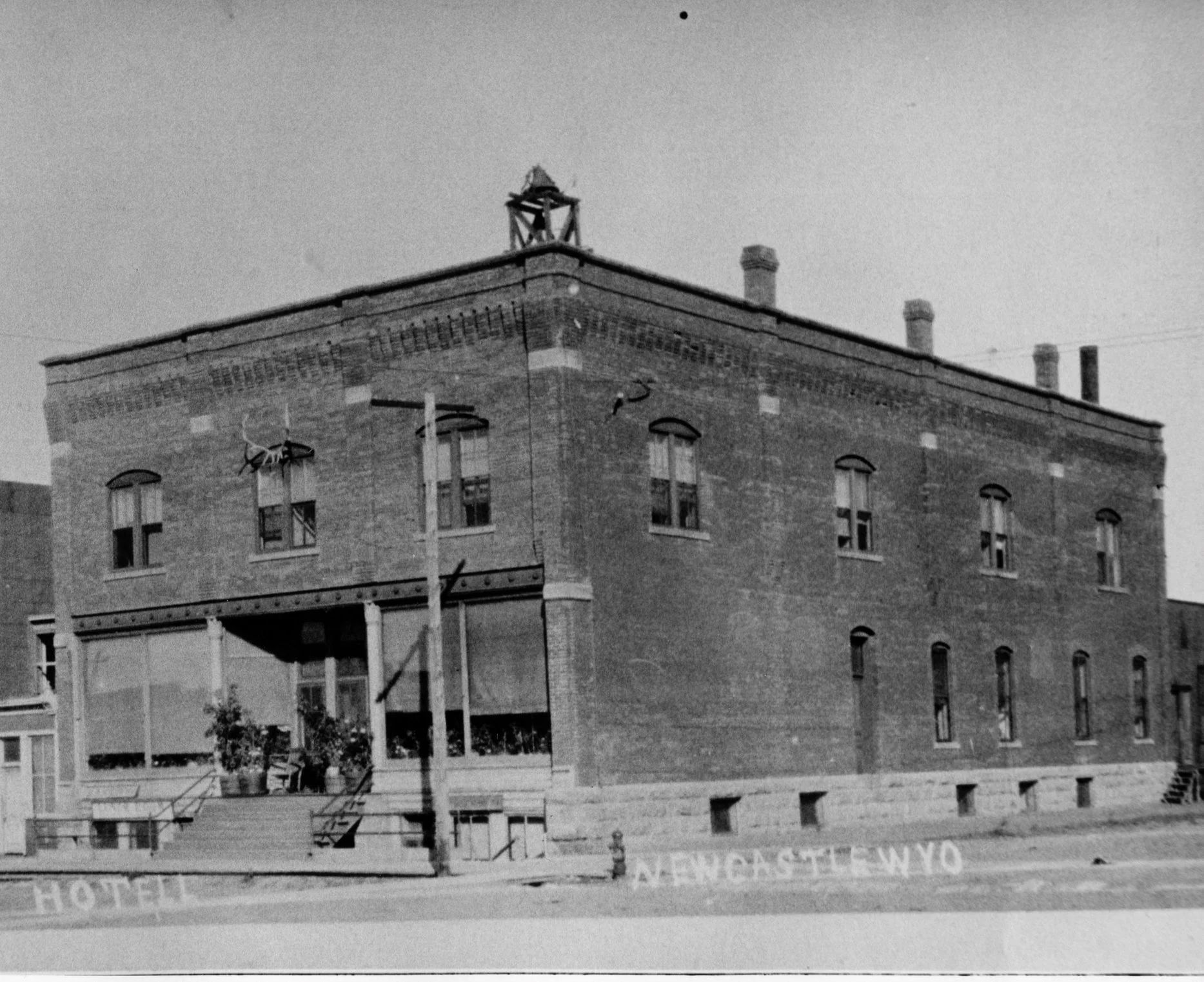
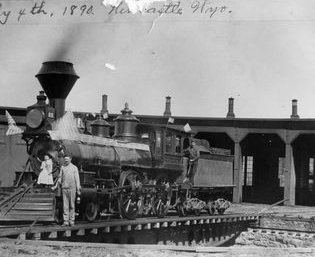
Newcastle, founded in 1889, owes its existence to the now-defunct coal town of Cambria, which was located just a few miles north of present-day Newcastle. Plans to expand the Chicago, Burlington & Quincy railroad line from western Nebraska into Montana in the 1880s necessitated a new source of coal along the proposed route, which led to the development of the Cambria coal mines. The town of Newcastle grew along the train tracks and served as a supply depot for Cambria. The mine’s supervisor was from Newcastle-Upon-Tyne, England, and named Newcastle, Wyoming, in honor of his hometown.
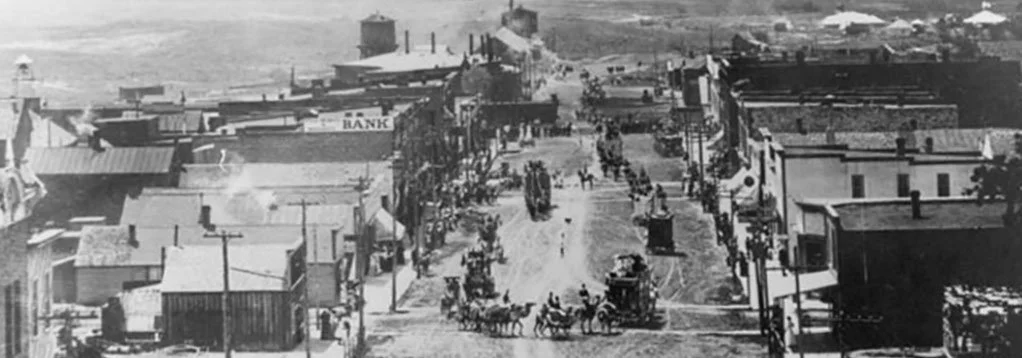
A circus — featuring camels, elephants and other creatures — makes its way along Newcastle's Main Street. From the Alice Schuette Collection, Weston County Historical Society.
By 1892, Newcastle boasted a population of about 1,000. Like so many western towns founded during the rapid expansion of the railroads across the high plains, Newcastle was a place full of colorful people and colorful stories. Mining, ranching, the railroad, mercantiles, saloons, dance halls, houses of ill repute and gambling establishments formed the foundation of Newcastle’s economy.
1903 was an important year in Newcastle’s history. Sheriff Billy Miller was killed at the Battle of Lightening Creek south of town, suspected murderer Diamond L “Slim” Clifton was hung by a vigilante mob, and President Teddy Roosevelt visited Newcastle. Roosevelt’s visit was short but highly anticipated, and residents came from all corners of the county to get a glimpse of and hear from the famous Rough Rider-turned-President. Some Weston County residents had even served with Teddy and his Rough Riders in the Spanish-American War.
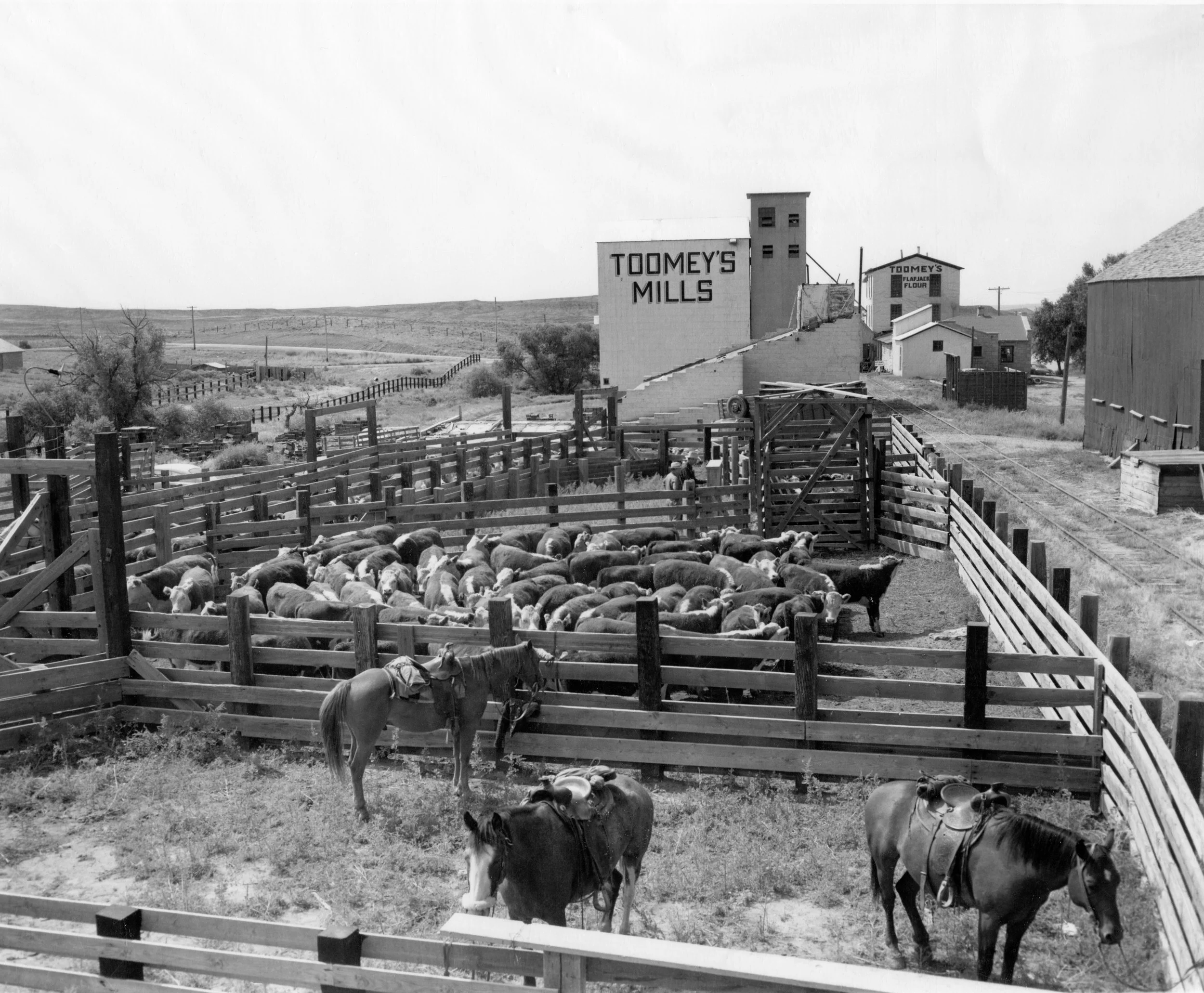
By 1950, Newcastle’s population had reached 3,395, thanks largely to a boom in the oil and coal industries. These industries, along with a solid ranching tradition and a burgeoning tourism market, continue to bolster the local economy today. Like their early counterparts, many Newcastle residents are coal miners and railroad workers. Local schools, the hospital, and the government are also important employers and community supporters.
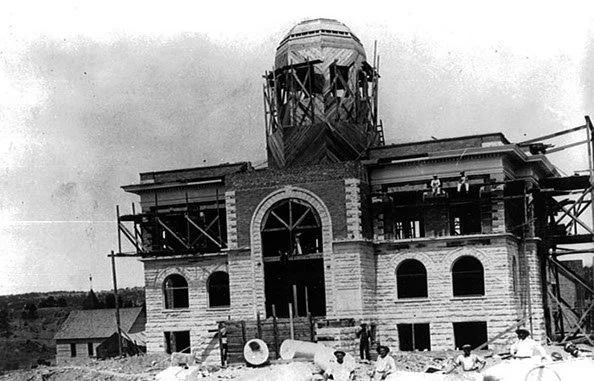
Weston County Courthouse under construction.
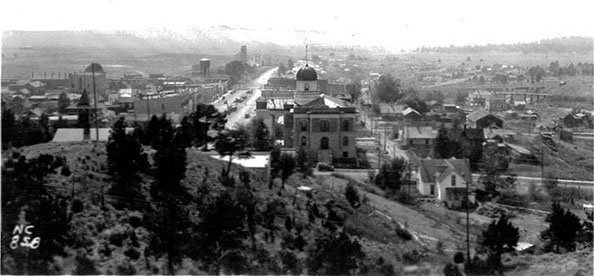
Aerial view of Newcastle.
Take a Walk
Take a Walking Tour of Historic Newcastle
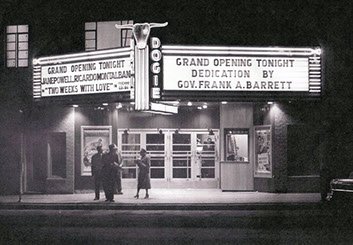
The Dogie
In 1950, Esther (Shorty) Shenton made plans to build a new, modern movie theater in Newcastle. The new theater was to boast updated projection equipment and a new sound system, which was complimented by luxurious, fireproof carpets and stage drapes, special devices for deaf and hard of hearing clientele, and a clear plastic viewing screen.
The floor plan of the theater was crafted in the shape of a saucer that would allow a perfect line of sight for all viewers. And the facility featured state-of-the-art air conditioning and heating systems, a snack bar and even a special cry-room for babies.
A contest to name the new theater was held, and the name Dogie Theater was chosen, in honor of the Newcastle High School mascot. A “dogie” is a motherless calf in a range herd of cattle and must be strong to survive.
The grand opening was held March 21, 1951, under the ownership of the Black Hills Amusement Company. Judge Ilslely was master of ceremonies, Mayor Ty Thomas gave the welcome, the Newcastle High School Band played, the Newcastle Male Chorus sang and Wyoming Governor Frank Barrett gave the dedicatory address.
About 450 advanced tickets at 65 cents each were sold for the grand opening. The movie Two Weeks In Love, starring Jane Powell and Ricardo Montalban, was the featured film. The Weston County Historical Society and Museum District staged a reenactment of the grand opening for the theater’s 50th anniversary in 2001.
Check out the Dogie Theater display at the Anna Miller Museum, which features the theater’s early projector and Shorty Shenton’s usher uniform.
Festivities are being planned to celebrate the theater’s
75 birthday in 2026.
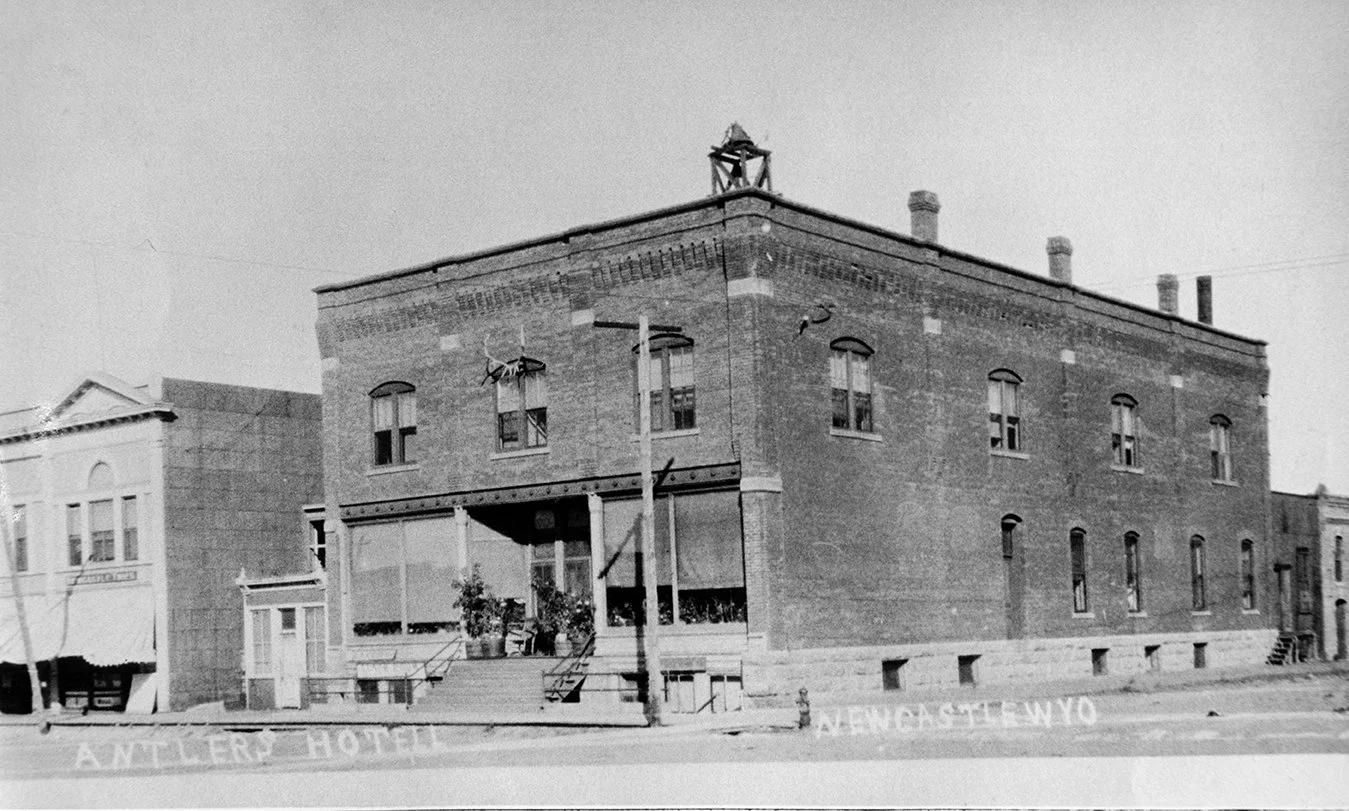
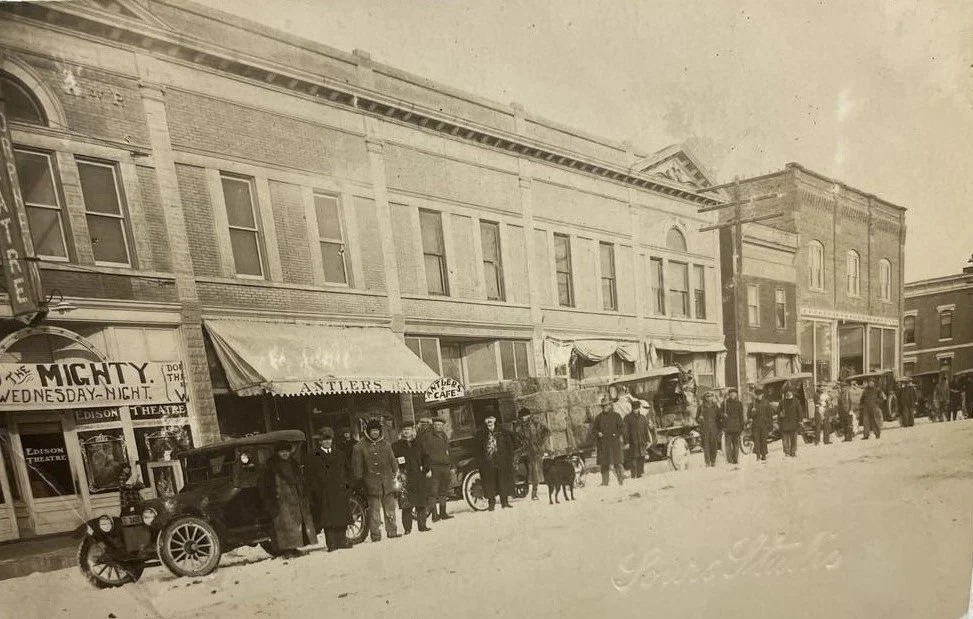
The building known today as the “Antlers,” was the first permanent building in Newcastle.
-
DOWNLOAD
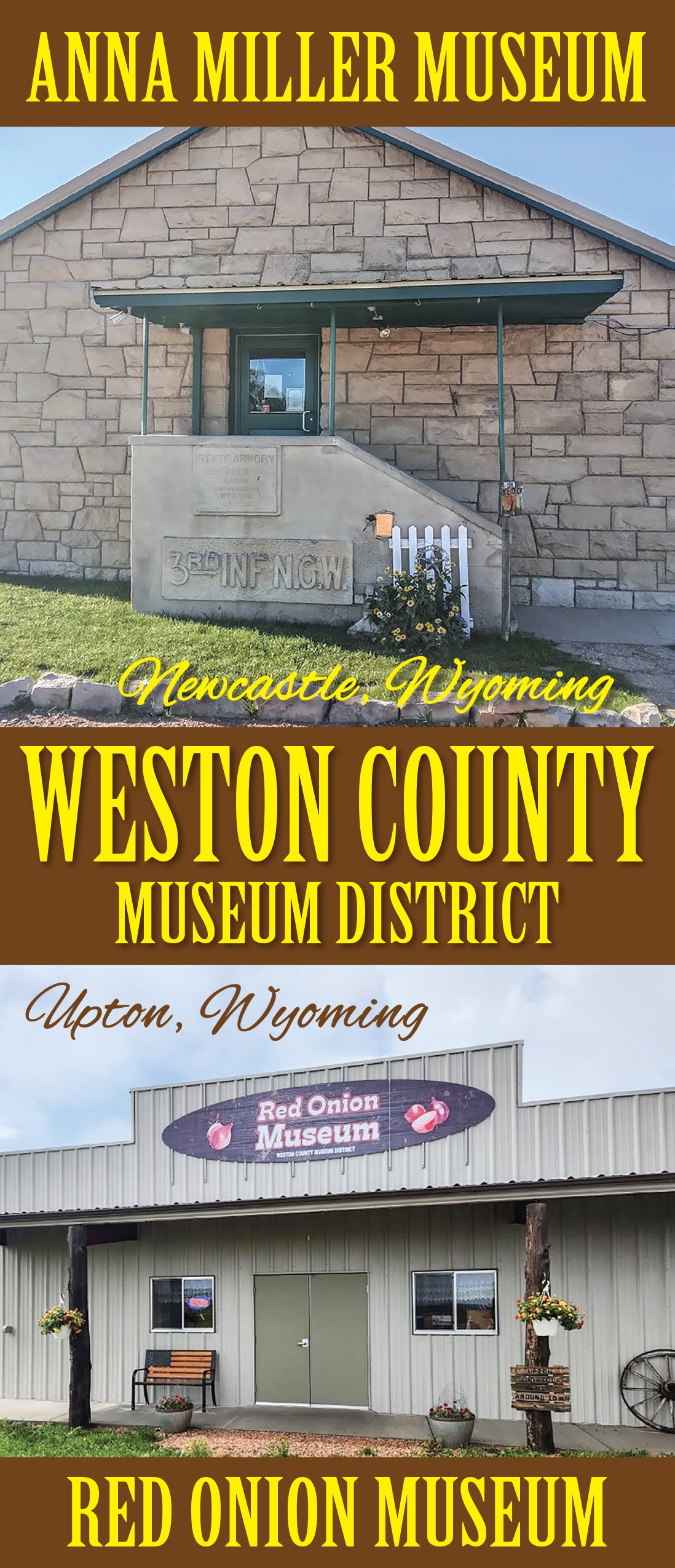
The Weston County Museums Brochure
-

TAKE A WALK
Take a walking tour of Historic Newcastle
-

GREENWOOD CEMETERY
Explore Newcastle’s historic
Greenwood Cemetery